Artificial stone silicosis
Jo Feary speaks on podcast
Thu, 30 Oct 2025
Dr Jo Feary was interviewed for the Society of Occupational Medicine (SOM) podcast on an episode about silicosis due to artificial/engineered stone.
Listen on the following channels:
Jo Feary talks about artificial stone silicosis on BBC Morning Live
Tue, 13 May 2025
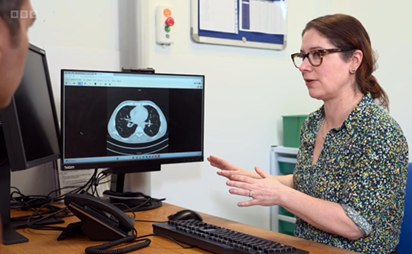
Dr Johanna Feary was recently featured on BBC Morning Live at Royal Brompton Hospital to talk about silicosis due to artificial stone, and advises those working with the material to get their lungs checked.
The feature also includes an interview with our patient Ryan, who spoke about how his silicosis diagnosis has affected his life. Nurse Tamanna Kabir was also featured performing spirometry with Ryan.
Jo Feary talks about artificial stone silicosis on Channel 4 News
Mon, 28 Oct 2024
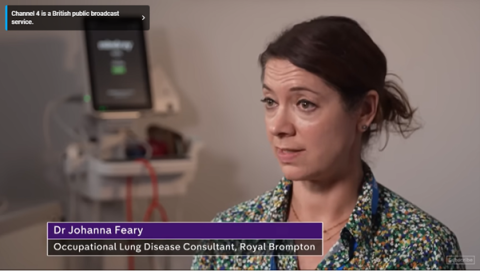
Dr Johanna Feary, Honorary Consultant in Occupational Lung Disease and Asthma, and patient Marek Marzec were recently interviewed by Channel 4 News to discuss the dangers of silicosis due to artificial stone. The piece was aired on Monday 28th October 2024 and you can watch it online here.
Media coverage of silicosis from artificial stone
Mon, 11 May 2026
Unlike natural stone, artificial or engineered stone contains extremely high silica content (up to 95% silica) and when disturbed and inhaled it can cause silicosis, an irreversible occupational lung disease.
Patient information day on silicosis and lung transplantation
Fri, 17 Jul 2026

The Lungs At Work team and lung transplantation specialists from Royal Brompton and Harefield Hospitals held an information event for patients and their families on Friday 17th July 2026.
Silicosis
If you are a healthcare professional and have a patient with suspected silicosis, please click here.
What is silicosis?
Silicosis is a long-term lung disease caused by breathing in dust containing silica. This causes inflammation (swelling) in your lungs, which can lead to lung scarring over time. This makes your lungs become hardened and stiff (fibrosis). Lung tissue that is hardened in this way does not function properly, and it can become more difficult to breathe.
What causes silicosis?
Silicosis is caused by breathing in dust which contains silica such as stone dust and sand. Silica dust is created when you cut, sand, drill, polish or grind stones containing silica.
You can get silicosis if you have breathed in high levels of silica dust over months, or smaller amounts of silica dust over years. You can develop silicosis even if you have not worked with silica for many years.
What are the main symptoms?
People with silicosis don’t usually have any symptoms in the early stages of the disease. You might even notice symptoms only after you have stopped working with silica dust.
The main symptoms of silicosis are:
cough
chest tightness
breathlessness
tiredness and weakness
Silicosis can also cause diseases which can give you other symptoms such as:
hair loss
joint pains
dry eyes and mouth
night sweats
Having a chronic disease like silicosis can also cause mental health problems including difficulty sleeping and low mood.
How is silicosis diagnosed?
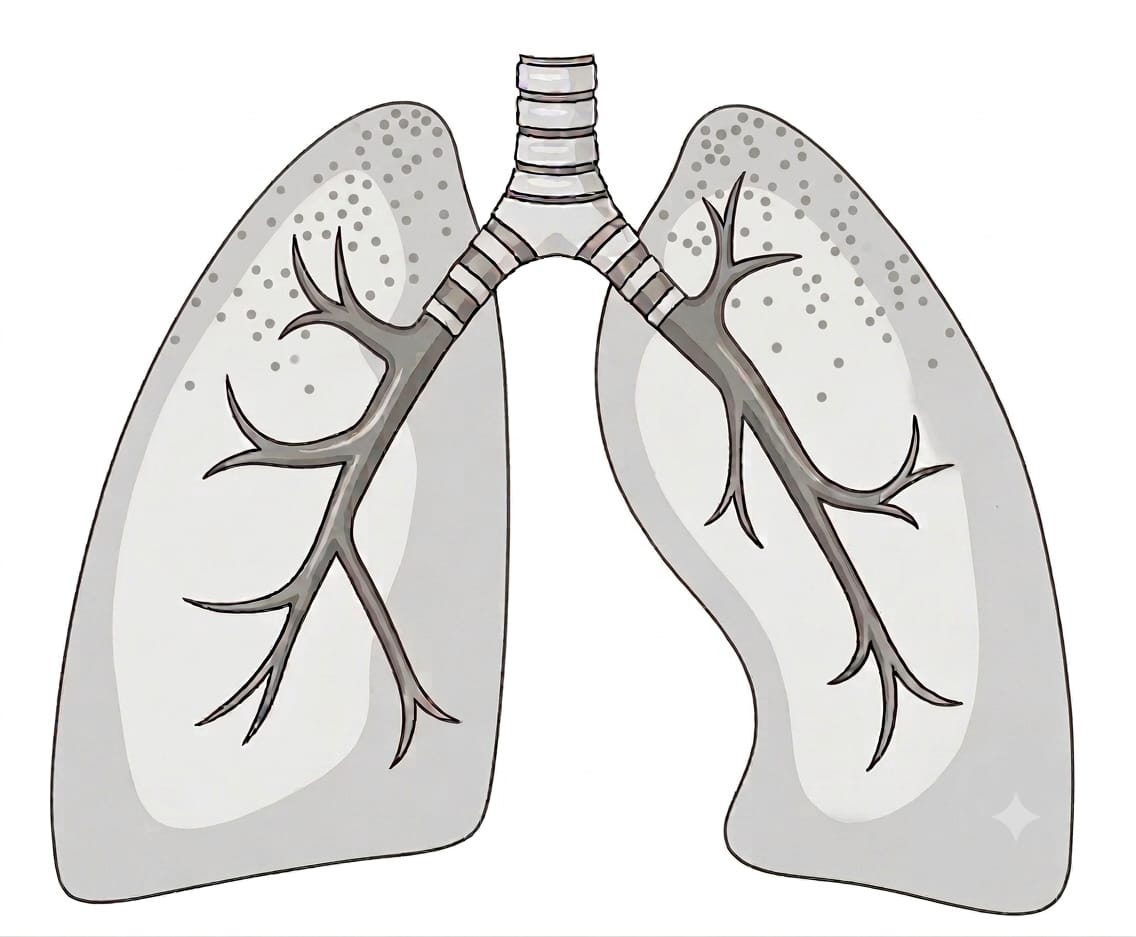
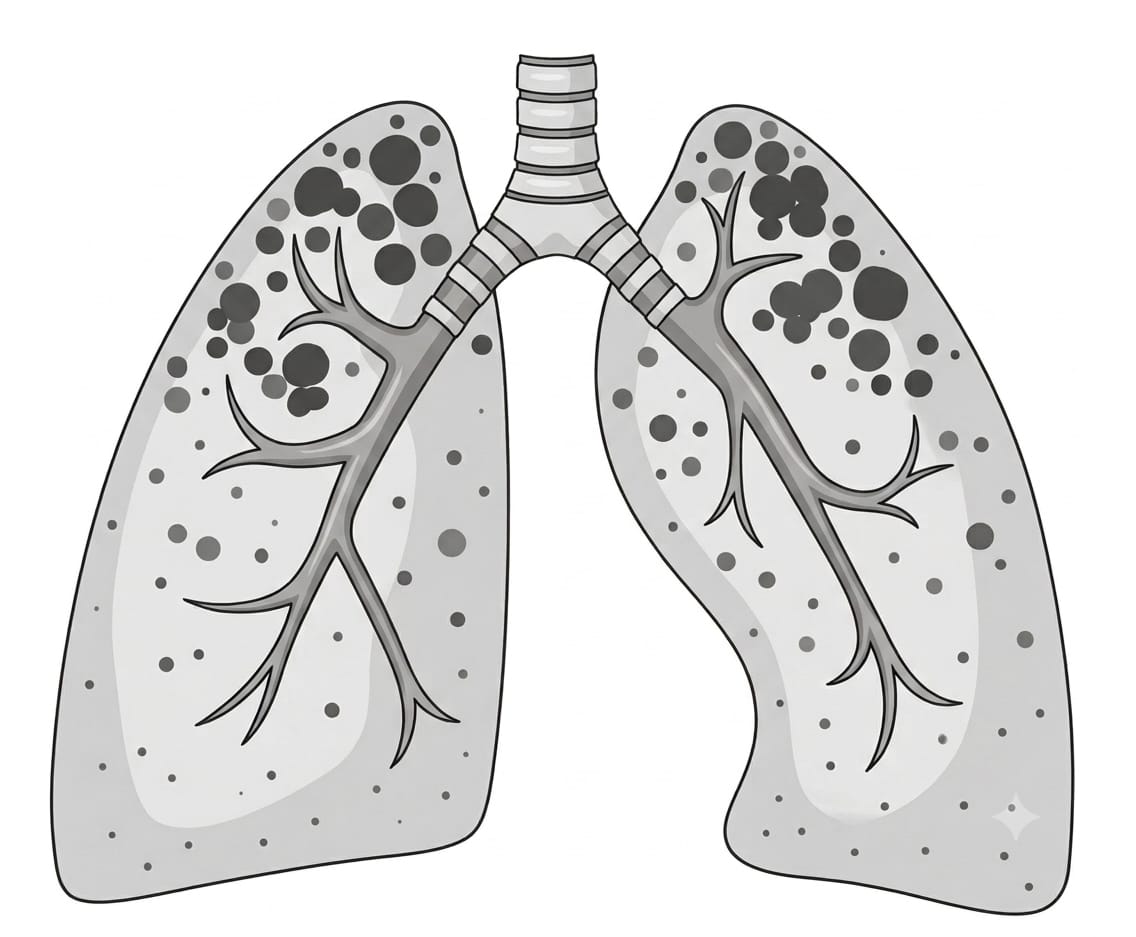
Silicosis is diagnosed on a chest x-ray or a CT scan. A CT scan gives a more detailed picture of the lungs. Silicosis shows on a scan as small dots or ‘nodules’.
There are different stages of silicosis. The two main stages are simple and complicated which depends on the size of the nodules.
Simple silicosis (smaller nodules) | Complicated silicosis (larger nodules) |
 |  |
At your hospital appointments we will ask you what jobs you have done, symptoms you might have, and whether you smoke.
We will do breathing, blood and urine tests. We might also arrange other tests.
How is silicosis treated?
Unfortunately there is no cure for silicosis because the lung damage cannot be reversed. Treatment aims to relieve symptoms and improve quality of life.
These might include:
Inhalers to open up your airways.
Medications to treat cough.
Anti-fibrotic medication which are anti-scarring tablets used to treat other lung diseases and may help some people with progressive silicosis.
Washing your lungs (“lung lavage”) to try to remove some silica from your lungs but there is no evidence this improves your lungs.
Oxygen therapy if you have low blood oxygen levels.
Pulmonary rehabilitation classes or exercise.
We may discuss referring you to our local lung transplant service. A lung transplant is a major operation and can only be considered if you are otherwise in good health and are not smoking.
We regularly speak to specialists across the world to talk about new treatment options.
How can I help myself?
For most people with silicosis, the most important thing is to stop being exposed to silica dust. This might mean changing your job or workplace. We know this is not always an easy decision.
Workplaces should follow health and safety law to protect workers from silica dust. But it is important to know that just wearing a face mask is often not enough to protect you from silica dust exposure. If you continue to work with silica dust you may want to talk to your employer about how to protect yourself and others at work.
You should also:
Stop smoking cigarettes and shisha – any smoking will make silicosis worse
Keep active – aim to walk 10,000 steps a day
Look after your mental health – speak with friends and family you trust, and let your doctor know if you would like to speak to a counsellor
Have regular vaccinations for flu/COVID/pneumonia if your doctor tells you to
Go to all your hospital appointments – silicosis can develop slowly or quickly, and it is important for us to look for any changes. Bring a friend or family member with you to help you remember what has been discussed.
What support is there for me?
If you have silicosis you can get different types of financial and other support.
Industrial Injuries Disablement Benefit
You can apply for a Government benefit called Industrial Injuries Disablement Benefit, or IIDB.
This is a sum of money paid weekly to people with silicosis and other industrial diseases.
You do not need to tell your workplace if you apply for this benefit.
If you have always been self-employed, you will not be able to get this this benefit.
To apply for this benefit, download and complete the IIDB application form from the Government website.
You can get help to complete the form. If you are based in London, you can contact LASAG, a charity which helps people with silicosis to apply for benefits (Tel: 0808 278 2515). There are similar charities outside of London you can find on this helpful map. You can also contact your local Citizens Advice Bureau for support to complete the application form.
Civil compensation
You may also be able to make a civil claim for compensation against your employer’s insurance company. It does not matter if you have worked for more than one company. It does not matter if your company has closed.
If you want to find out more then you should speak to a lawyer who has experience working with industrial diseases. We can give you names of companies who may be helpful. Making a legal claim usually takes more than a year.
This should be done on a ‘no win, no fee’ basis.
Mental health support
Living with a long-term disease like silicosis can affect your mental health. So it is really important that you have the right people around you to support you on this journey.
We are here to help you take things step by step, to understand what is happening and how you might be feeling, and to connect you to support. We will also ask about your mental health during your hospital appointments. If you want to speak to a counsellor, let your doctor know.
You can also refer yourself for “talking therapies”. To do this type the name of your GP surgery at this website: https://www.nhs.uk/service-search/mental-health-services/find-nhs-talking-therapies-for-anxiety-and-depression/enter-gp
What happens next? How often will you check on me?
We will organise regular appointments to see you and tests to monitor your health.
How often we see you will be based on your individual situation and health.
Make sure you go to all your appointments – silicosis can develop slowly or quickly, and it is important for us to notice quickly if there are any changes.
You should see you GP for other health issues as normal.
Resources
- Download silicosis factsheet
- News coverage of silicosis
- UK Silicosis Registry
- Training videos on silica dust awareness (British Occupational Hygiene Society/BOHS)
Videos
Page last reviewed 7 August 2026
Speaking at Occupational Health 2026 Conference
Tue, 16 Jun 2026
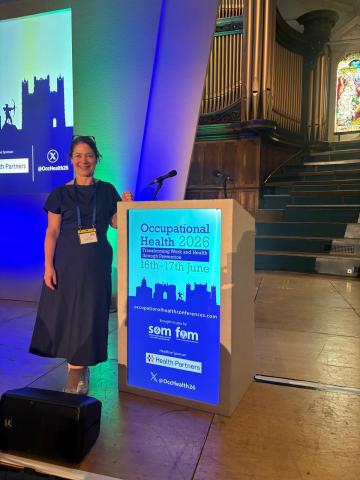
Dr Jo Feary spoke at SOM and FOM's recent Occupational Health 2026 Conference held in Nottingham, UK on 16 June 2026.
Dr Feary did a Colt lecture on silicosis, and in particular the recent rise in cases of artificial stone silicosis.
Read the full programme on the conference website.
UK Silicosis Registry
In 2026, we set up the UK Silicosis Registry (UK SR) supported by funding from the RBHH Charity. The UK SR is based at Imperial College London.
A Registry is like a survey that collects health information about people with a specific medical condition. In the UK SR, these are people with silicosis who have developed the condition from exposure to silica dust in their jobs. Bringing together information on people across the UK means we can better understand silicosis and how best to treat it. We can also compare patients with silicosis in the UK with those in other countries.
This is an observational study, which means we are not testing any new treatments but instead collect information about work histories, medical histories and test results recorded during usual clinic visits with your respiratory clinical teams. The data is pseudo-anonymised so that individuals cannot be identified.
At the moment, only patients seen in the Royal Brompton Hospital Occupational Lung Disease clinic are able to take part but the plan is to expand this to other services around the UK in the near future.
For further information on the study, please contact the chief investigator Dr Johanna Feary (j.feary@imperial.ac.uk).
